

Video dominates the digital landscape. This year, it is expected to account for 82.5% of all internet traffic, and 89% of consumers want more from the brands they love and the brands that interest them. So it is no surprise that 91% of businesses utilize video, and 95% of marketers consider it essential to their strategy.
But raw footage alone doesn’t suffice. To stand out, brands must harness storytelling—the secret sauce that transforms video from noise into emotional connection. By following a proven story framework, your videos can captivate audiences, build trust, and drive action. This article explores why video storytelling is compelling and how you can use it to fuel your brand.
The Power of Video
The figures are staggering:
-
YouTube experiences 14 billion visits each month and has 2.5 billion active users.
-
78% of consumers prefer short videos for learning about products, compared to only 9% for text and 5% for ebooks.
-
Eighty-two percent of consumers say video influenced a purchase decision.
AI tools and smartphones have made video creation easier than ever. Sixty-two percent of businesses produce videos in-house, and fifty-one percent use AI to streamline production. The result? High-quality video is now accessible to brands of any size.
However, accessibility alone won’t drive ROI. It’s storytelling that turns video into marketing rocket fuel.
Why Storytelling Matters
Humans are hard-wired for stories, and they have been for thousands of years. Storytellers were historians. Even in ancient times, the story was the method used to convey and make history memorable.
A compelling story sparks emotion, fosters connection, and drives action. In a sea of content, stories enable your brand to cut through the noise.
Consider your video not as a pitch, but as a mini-movie where your customer is the hero. Organize your content with seven simple yet powerful elements, which have been the fundamental components of stories for thousands of years. In earlier newsletters, we have talked about them for print, but they are equally (or more) valid for making your videos impactful.
-
Main character (your audience)
-
Want/Need (their desire)
-
Guide (your brand)
-
Plan (how you help)
-
Call to Action (what to do next)
-
Success (what winning looks like)
-
Failure (what’s at stake if they don’t act)
Indeed, there is a lot of nuance and understanding behind each of these components, but here’s an overview of how this works in practice:
1. Make Your Audience the Hero
Your customer, not your brand, is the main character in the story. Example: Illustrate a small business owner struggling to attract customers. At this stage, no one cares about the features of your product.
Authenticity is crucial—91% of consumers say video quality affects trust. Polished, relatable videos resonate best.
2. Tap Into Their Desire
The main character’s desire drives the story. Videos should convey what the main character wants—whether it’s more customers, a better experience, or greater efficiency.
Grab viewers quickly: you have just 8 seconds before most lose interest. Highlighting the customer’s desires keeps them engaged.
3. Position Your Brand as the Guide
Your brand is not the hero; it’s the trusted guide that helps the hero succeed.
For instance, a software company demonstrating how its tools streamline operations is more engaging than just a product demo. According to 88% of marketers, video enhances product understanding—leverage this.
4. Present a Clear, Simple, Digestible Plan
Good guides provide clear next steps. Three or four. Don’t overwhelm. Simplify complex processes into straightforward paths that viewers can follow.
Example: “Use our platform to create ads in three easy steps.”
How-to videos have the highest watch times and drive action—65% of executives visit a vendor’s site after seeing such a video.
5. Prompt Action
Every video should include a direct, clickable, or easily achievable Call to Action (CTA). Without one, even the best story can fizzle. You might be surprised at how often the Call to Action is missing in action!
Effective CTAs: “Book a demo,” “Start free trial,” “Shop now”, convert viewers into customers. In longer videos, CTAs positioned at the end achieve a 65% conversion rate.
6. Paint a Picture of Success
Demonstrate what success looks like. Highlight satisfied customers, flourishing businesses, and positive results.
Testimonial videos stand out here—39% of marketers prefer them, and 84% of consumers are encouraged to buy after viewing success stories. For example, a bakery bustling with customers after utilizing your service illustrates the benefit clearly.
7. Highlight the Stakes
Every good story needs tension. What occurs if the viewer doesn’t take action?
Contrast failure (lost sales, stagnant growth) with success to create urgency. Short videos illustrating these stakes are highly effective—66% of consumers find this approach engaging.
Video’s Built-In Advantages
Beyond storytelling, video offers unparalleled reach and influence:
-
Seventy-eight percent of companies add captions to improve accessibility.
-
79% of consumers watch on smartphones; vertical formats lead to 10–20% higher conversions.
-
Short-form videos provide the highest ROI at 21%, and 93% of marketers report a strong ROI from video overall.
Producing content is easier than ever. AI tools and smartphones allow even small businesses to create professional-looking materials. The playing field has never been more equitable. If the story is compelling, viewers won’t even notice that you aren’t Jordan Peele or Quentin Tarantino.
The Emotional Edge
Video storytelling provides an emotional advantage that text and static ads cannot match.
62% of consumers value authenticity over AI-driven personalization. A story-driven video showing a customer’s journey from struggle to success humanizes your brand and fosters trust. The emotional connection keeps your brand top-of-mind and drives conversions.
Why Story-Driven Video Wins
Video dominates marketing because it works:
-
92.3% of internet users watch videos.
-
YouTube is used by 90% of marketers.
-
TikTok, the rising star, is seeing a 27.64% jump in marketing investment.
But it’s storytelling—not just video—that distinguishes great brands from the rest. Structured storytelling transforms raw footage into content that captivates, connects, and converts.
Ready to Ignite Your Brand?
With 95% of marketers prioritizing video in 2025, the competition is intense. Brands that excel in storytelling will lead the pack.
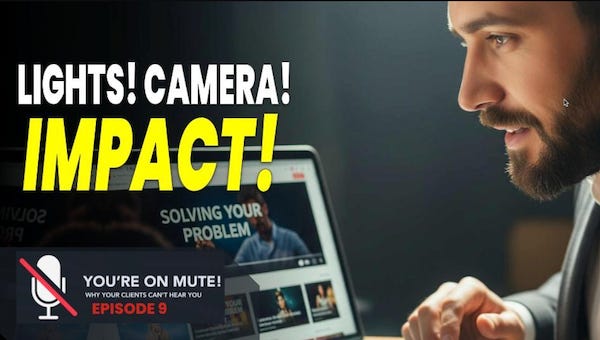
Lights. Camera. Impact, baby! (That’s how those movie people speak.)
Questions? Please email us at info@thesaltzmangroup.com
SCHEDULE a 30-minute discovery call.
One More Thing
Check out our 2-3 minute YouTube Snarky Summaries. (please LIKE and SUBSCRIBE)
Thanks for reading You’re On Mute. Subscribe for free (contributions gratefully accepted) to receive new posts and support my work.
Subscribed