Narrative Drift
Why a Company’s Message Slowly Mutates Into Chaos
This is the fourth and final installment of our “Where Communication Breaks Down” series. We have explored The Alignment Gap, When Your Email Is The Problem, and The Meeting Mirage. This episode examines how we go off track and how to bring everything back together for success!
Organizational messages don’t usually collapse overnight.
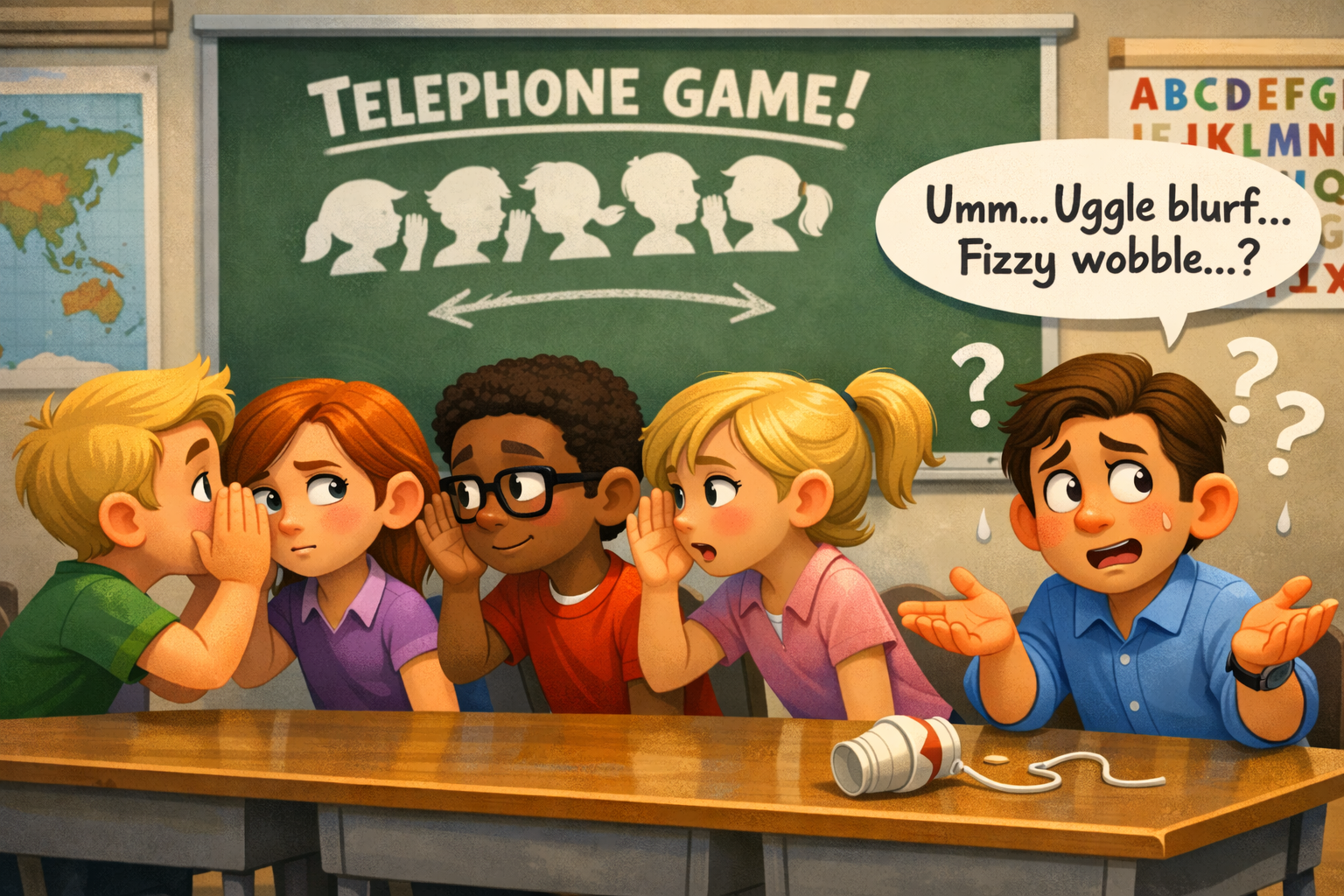
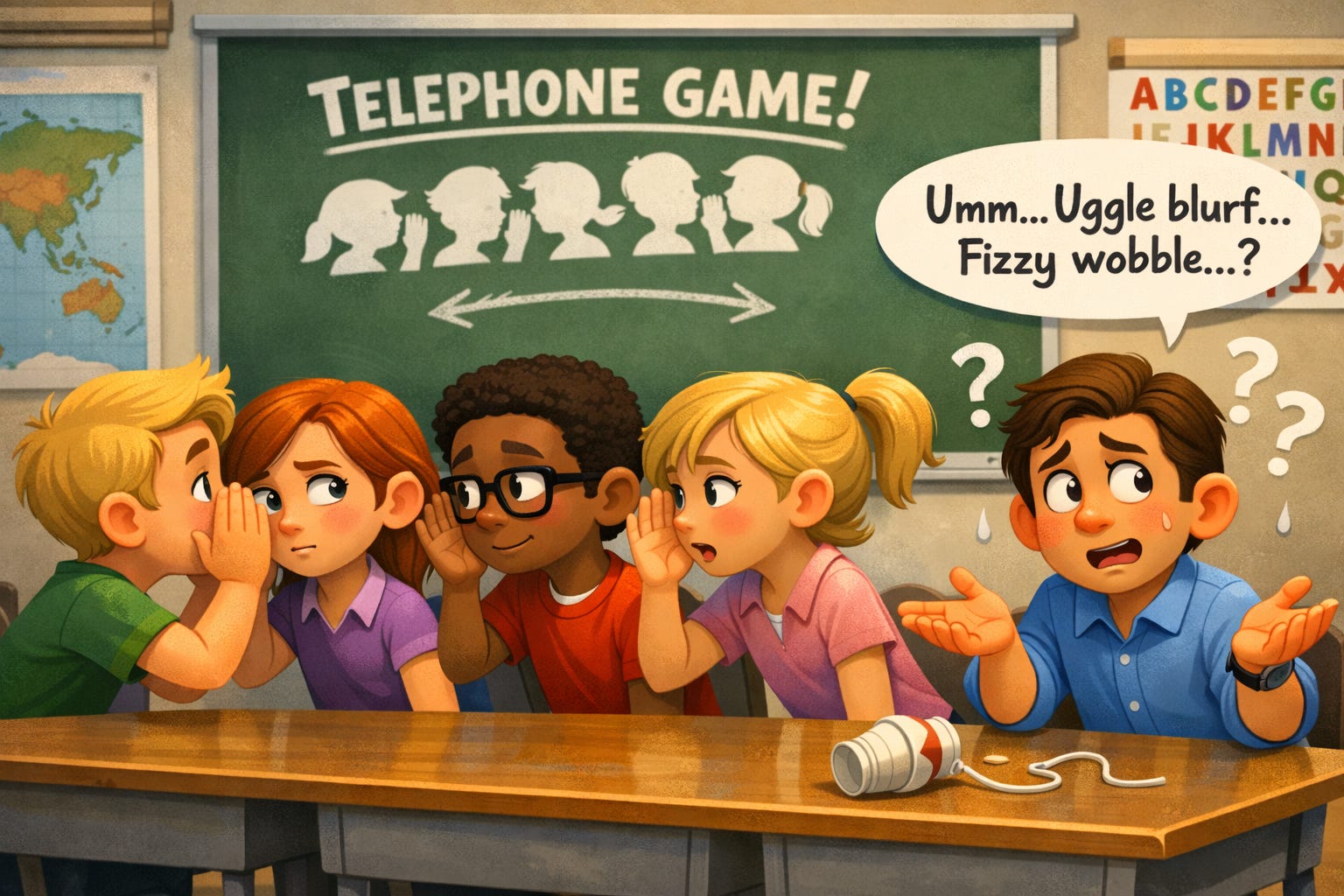
They drift. What starts as a clear story about who you are and why you exist gradually changes as it passes through layers of management, marketing, sales, and culture. Over time, the original narrative breaks into competing versions of “the truth.”
The science of memory distortion:
Human memory is reconstructive, not reproductive. Each retelling of a message subtly alters it. This is well-supported in cognitive psychology: recall is affected by context, incentives, and recent experiences. In organizations, each layer tailors the story for local goals, creating narrative entropy.
Symptoms of narrative drift:
– Different departments describe the company’s mission in varying ways
– Sales promises features that the product has never committed to
– Marketing language diverges from customer realities
– Leaders use aspirational language that employees perceive as fiction
Why drift accelerates:
– Turnover resets institutional memory
– Mergers bring conflicting narratives
– Incentives favor short-term wins over long-term coherence
– No single source of truth for the story
How to stabilize the narrative:
– Define a canonical story: purpose, problem, promise, proof.
– Use simple language, not corporate poetry.
– Train leaders and customer-facing teams in the same story.
– Audit the story in real settings: listen to how employees describe the company.
– Reinforce the narrative through rituals, onboarding, and storytelling.
Example:
A fintech company claimed to be “customer-obsessed,” but sales scripts emphasized speed, product demos highlighted features, and internal metrics focused on cost-cutting. Customers felt confused. When leadership rewrote the core message into a simple promise—“We help finance teams close the books in half the time without heroics”—and aligned messaging, product priorities, and KPIs around it, coherence was restored.
Psychological Impact of Incoherent Narratives: Narrative coherence eases cognitive load. When people cannot tell a simple story about what the organization stands for, they feel uncertain and disengaged. The brain looks for consistent models of reality; when the story is broken, trust diminishes.
A narrative is infrastructure:
Treat your story like vital infrastructure. Keep it well-maintained. Address deviations early. Make changes visible. If you let each team freelance the message, you don’t have a brand—you have noise.
Messages don’t decay because people are malicious; they decay because systems don’t automatically preserve meaning. If your organization sounds different depending on who you ask, the story has gone off course. Keep letting your narrative change without guidance, and eventually even you won’t recognize your own message… you’re on mute.