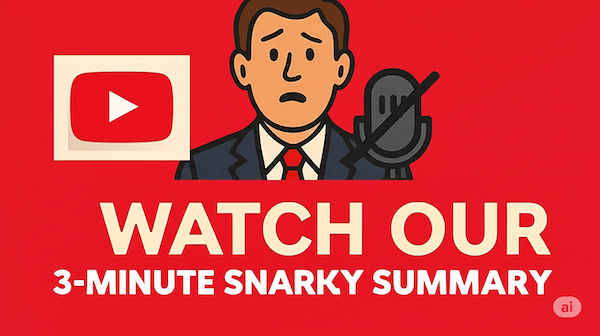

You’ve delivered the pitch. You’ve prepared the email. You’ve got the slides, testimonials, and value proposition all set. And still, your client looks confused, uninterested, or even worse… they ghost you.
No matter how polished your presentation is or how many buzzwords you pack into your deck, something’s off. It isn’t you. It is the brain you’re pitching to.
You’re on mute, and you don’t even realize it.
The cause? Behavioral biases. These hidden reflexes in our brains influence how we see, hear, and respond to the world. They aren’t just psychological quirks; they are fundamental barriers to clear communication. In business, they distort everything from how we sell to how we listen.
Let’s explore the problem and uncover three of the most harmful, hidden biases that cause your message to fall flat.
The Invisible Filters in Every Conversation
Whether you’re a founder pitching to investors or a sales executive trying to close a deal, communication is never neutral.
You’re not just sending a message. You’re transmitting it through someone else’s internal filter—a noisy mix of assumptions, habits, and emotional patterns. And guess what? You have filters too.
These filters often stem from cognitive biases. These mental shortcuts help us process the world quickly, but they can also lead to inaccuracies. They are ingrained in how humans function. While they save time, they can also create blind spots, resulting in misunderstandings, mistrust, and missed opportunities.
Here are three of the biggest offenders, along with real-world examples of how they show up in business communication and how they can subtly erode trust.
1. Confirmation Bias
I only hear what confirms what I already believe.
You’re pitching a new solution to a prospect. It’s innovative, fresh, and backed by data. But the client seems resistant from the start. Why? Because they’ve already decided what “kind” of vendor you are.
Example:
Imagine you’re a tech consultant pitching to a traditional manufacturing firm. The CTO already believes that “tech guys don’t understand operations.” So every time you mention automation or software, they tune out or perceive it as a threat rather than a benefit. Your data won’t break through that wall. Their brain is only scanning for confirmation of what they already believe.
Impact: You might be providing exactly what they need, but if your message challenges their worldview, they’ll dismiss it without understanding why.
2. Anchoring Bias
The first number I hear serves as the reference point, even if it’s incorrect.
We like to think of clients as logical decision-makers. But once you quote a price, timeline, or deliverable, you’ve set a mental “anchor” that everything else is compared to.
Example:
You’re in a multi-vendor bid. The first competitor offers a ballpark figure: $10,000. You respond with $18,000, based on a realistic scope. Even though your price is accurate, the client now perceives it as expensive because they’re unconsciously anchored to the $10,000 mark.
Impact:
Anchors distort perception. If you’re not setting the initial frame, you’re just reacting to someone else’s, even if it’s unrealistic.
3. Overconfidence Bias
I’m already doing enough; I don’t need to change.
Sometimes, the client listens, understands, and even agrees with your insights… but still doesn’t take action. Why? Because they believe they’ve got it covered.
Example:
You’re presenting a risk mitigation strategy to a mid-size enterprise. You highlight potential vulnerabilities in their supply chain. They nod along. Then they say, “We already have something like this in place.” What they mean is, “We’re confident we’re doing fine, even if we’re not.”
This isn’t stubbornness. It’s a deeply ingrained bias, the tendency to overestimate our own competence and downplay risks.
Impact:
Overconfidence kills urgency. It dulls the edge of your insight and makes essential Recommendations seem optional, even when they are crucial.
These three biases don’t operate in isolation. They stack!
A client stuck on a low number, confident they’ve already solved their problem, and viewing everything skeptically? That’s not a “tough lead.” That’s a human brain doing exactly what it’s built to do: protect existing beliefs and avoid uncertainty.
Now flip it. You, the seller or communicator, are also biased. You might be ignoring signals because they don’t confirm your strategy (confirmation bias). You might be anchoring your pitch around your previous client, even if this one is totally different (anchoring). Or assuming you’ve nailed the messaging when the client clearly isn’t tracking (overconfidence).
Miscommunication isn’t always caused by a lack of skill. More often, it’s a bias trap.
You’re still on mute unless you become aware.
Here’s the bottom line: if you don’t understand the mental noise in the room, you’re not being heard. No amount of polish, automation, or AI-enhanced CRM tools can fix a pitch that’s hitting a wall of unconscious bias.
So what do you do?
-
Check your assumptions. Are you selling what the client truly fears or wants, or what you believe they do?
-
Reset the anchor. Clearly set expectations about price, scope, and value first.
-
Invite resistance. Ask clients what they disagree with. Their objections are often gifts—windows into their biased landscape.
Communication isn’t just about clarity; it’s about resonance. And you can’t resonate if you don’t understand what’s distorting the sound.
Final Word: Biases Don’t Silence the Message;
They Silence the Listener
In an age filled with noise, everyone tries to speak louder.
But often, the solution isn’t more volume—it’s a clearer signal.
If you’re not considering the invisible biases that shape your client’s perception, your message might seem perfect to you… But what about them?
You’re still on mute.
Struggling to stand out, reach the right customers, and fill your pipeline? We can help.
Schedule a 30-minute discovery call to learn about our exclusive offer for Substack subscribers.
One More Thing
For you TL;DR folks (you know who you are), check out our YouTube Snarky Summaries. (please LIKE and SUBSCRIBE)