Last week, we talked about The Curse of Knowledge: the moment when expertise stops being an advantage and starts becoming a liability. When you know too much, you forget what it’s like not to know. You skip steps. You assume context. You explain instead of connect.
This week is the uncomfortable sequel.
Because even if you fix the Curse of Knowledge—even if your explanation is cleaner, your thinking is sharper, your slides are tighter—there’s another force quietly working against you.
Your audience may have already decided not to listen.
Not after your pitch. Not halfway through your explanation. Before you even get started.
Welcome to the seven-second filter.
What the Seven-Second Filter Really Is
The seven-second filter isn’t a slogan or a gimmick. It’s shorthand for a deeply human reality: the brain makes rapid, subconscious judgments about relevance and safety long before conscious thought shows up.
Neuroscientists often describe this as the difference between System 1 and System 2 thinking. System 1 is fast, emotional, automatic, and efficient. System 2 is slower, analytical, and effortful. The problem is that System 2 doesn’t get to speak unless System 1 opens the door.
And System 1 is ruthless.
In those first few seconds, your listener’s brain is silently asking questions it will never say out loud:
Is this for me?
Is this useful?
Is this going to waste my time?
Is this person going to make me work too hard?
If the answer to any of those questions is “probably not,” the filter closes. Politely. Invisibly. Permanently.
From that moment on, you’re talking—but you’re not being heard.
You’re on mute.
Why Smart People Trigger the Filter Faster
Here’s the part that makes this especially uncomfortable for experts.
The more knowledgeable you are, the more likely you are to open with what you value: credentials, background, nuance, accuracy, completeness. You lead with context because context matters—to you.
But the human brain under cognitive load is doing the opposite. It is trying to conserve energy. It is scanning for friction. It is deciding whether to invest attention or retreat.
That’s why phrases like these quietly kill engagement:
“Let me give you a little background…”
“This is a bit complicated, but…”
“Before we get into that, I need to explain…”
To an expert, these sound responsible. To a listener’s brain, they sound expensive.
Clarity is not the absence of complexity. It’s the presence of priority.
Your audience is not waiting to be impressed. They are waiting to be oriented.
Orientation Beats Information
Orientation answers one essential question before anything else:
Why should I care right now?
Information answers many questions. Orientation answers the only one that matters in the first seven seconds.
This is where most business communication breaks down. We confuse being thorough with being helpful. We mistake explanation for engagement. We assume attention is something we automatically deserve.
It isn’t.
Attention is borrowed. And the interest rate is brutal.
If your opening doesn’t immediately signal relevance, your audience doesn’t argue with you. They don’t push back. They don’t interrupt.
They simply stop listening.
The Silent Cost of Being on Mute
When the seven-second filter closes, the damage is subtle but severe.
Your ideas get labeled as “nice, but not urgent.”
Your recommendations get delayed, diluted, or delegated.
Your value gets judged not by the quality of your thinking, but by how hard it felt to access it.
This is why great strategies die in conference rooms. Why smart consultants struggle to influence decisions. Why leaders feel misunderstood despite explaining themselves repeatedly.
They didn’t lose the room with bad ideas. They lost it with a bad opening.
What Opens the Filter
So what actually works in those first seven seconds?
Not hype. Not cleverness. Not a verbal fireworks display.
What works is recognition.
Recognition tells the listener’s brain: This is about you. I see your problem. I understand your risk.
That means opening with:
A problem they already feel
A consequence they’re trying to avoid
A tension they haven’t resolved
Before you explain the solution, before you defend the approach, before you share the data, you earn attention by naming something familiar.
When people feel recognized, they relax. When they relax, they listen.
The Discipline This Requires
The seven-second filter demands a kind of discipline most professionals aren’t trained for.
It requires you to delay what you know in order to lead with what they feel. It requires you to suppress your expertise long enough to establish relevance. It requires you to decide what not to say first.
That restraint can feel uncomfortable, even irresponsible.
But here’s the truth:
If you don’t earn attention first, accuracy doesn’t matter.
Why This Matters More Than Ever
In a world saturated with information, clarity has become a competitive advantage.
Your audience is distracted, overloaded, and constantly filtering. They are not being difficult. They are being human.
The seven-second filter isn’t something to hack. It’s something to respect.
Because if you don’t design for it, your message won’t fail loudly.
It will fail quietly.
And you’ll keep wondering why no one seems to hear you—
Even when you’re saying all the right things.
Free 30-minute marketing discovery call
Schedule a 30-minute discovery call to learn about our exclusive offer for Substack subscribers.
One More Thing
For you TL;DR folks (you know who you are), check out our YouTube Snarky Summaries. (please LIKE and SUBSCRIBE)
There is a moment in nearly every sales call, boardroom presentation, or leadership offsite when the room quietly disconnects. Heads nod. Notes are taken, but eyes glaze over. The speaker is knowledgeable, credible, and experienced. In fact, that is precisely the problem. They know too much.
This is the Curse of the Expert. The deeper your understanding of your field, product, or organization, the harder it becomes to explain it clearly to those outside your head. Expertise, which should be an advantage, quietly becomes a communication liability.
For businesspeople, sales professionals, and executives, this curse does real damage. It slows decisions, erodes trust, and costs revenue. Worse, it is often invisible to the person affected by it.
Why expertise breaks communication
Psychology has a name for this problem: the curse of knowledge. Once you know something, it becomes almost impossible to imagine what it is like not to know it. You forget what was confusing. You skip steps. You assume a shared context that does not exist.
Neuroscience reinforces this. The brain is a prediction machine, constantly trying to conserve energy by filtering information and filling in gaps. When experts speak, they tend to use compressed language. Acronyms, abstractions, and insider shorthand feel efficient to them because their brains have already built dense neural pathways around the subject.
The listener’s brain lacks those pathways. Instead of clarity, it experiences cognitive overload. Working memory becomes saturated. The prefrontal cortex, responsible for reasoning and decision-making, begins to fatigue. When that happens, people stop evaluating and start retreating.
Confusion does not create curiosity. It creates avoidance.
The Product Demo That Overwhelms
A software founder presents a feature-rich demonstration with configurations and system logic. The buyer recognizes the product is powerful, but never hears what will actually change for them tomorrow. The deal stalls not because of doubt but because clarity never arrives.
Takeaway: When expertise replaces outcomes, decisions disappear.
Expertise creates blind spots, not authority.
Another psychological factor is fluency bias. We tend to trust information that feels easy to process. When communication is simple, structured, and concrete, the brain interprets it as more credible. Conversely, when communication is complex, layered, and abstract, the brain interprets it as risky.
Experts often believe the opposite. They assume that complexity signals sophistication. In reality, complexity signals danger to a listener’s brain.
The Leadership Update That Freezes Action
A senior executive presents a nuanced strategy rich in context and trade-offs. Everything is accurate, but no clear recommendation ever emerges. The team leaves aligned on the complexity and unsure of what to do next.
Takeaway: Complexity transfers uncertainty, not authority.
Why storytelling cuts through expertise overload
Storytelling is not a soft skill. It is a neurological shortcut.
Stories organize information in ways that the brain prefers to receive it. They provide sequence, causality, and meaning. Instead of asking the listener to build a mental model from scratch, a story provides one already assembled.
The Sales Call That Ends With “Let Me Think About It”
A consultant explains their methodology in careful, impressive detail. The prospect agrees it all makes sense, but can’t clearly picture the outcome. Faced with uncertainty, they choose delay over risk.
Takeaway: Confusion doesn’t block persuasion. It blocks decisions.
How to escape the Curse of the Expert
The goal is not to simplify. It is to bridge the gap between what your audience knows and what you know.
Clarity is a leadership skill, not a talent.
If your audience cannot understand you, it does not matter how right you are.
You are on mute.
Free 30-minute marketing discovery call
Schedule a 30-minute discovery call to learn about our exclusive offer for Substack subscribers.
One More Thing
For you TL;DR folks (you know who you are), check out our YouTube Snarky Summaries. (please LIKE and SUBSCRIBE)
I started podcasting 11 years ago and have released over 530 weekly episodes. During that time, I have learned a lot about the do’s and don’ts. I figured out how to choose guests (we have an interview format) who speak directly to my audience and match the work I do for clients. The podcast has helped establish me as a thought leader and has repeatedly generated enough business to justify its existence. Others often ask me what it takes to create a successful podcast.
I tell them that a podcast is like an infant; it requires constant attention, care, and feeding.
Before you hit record, here’s the honest truth about effort, ego, and what really builds an audience. Every week, another business leader proudly announces, “We’re launching a podcast!” The logo looks sleek. The intro music hits hard. The mic is shiny. The dream? Instant brand recognition authority.
The truth? Most podcasts fade faster than New Year’s resolutions. The average new podcast lasts about seven episodes before disappearing into cyberspace. Despite knowing this, we somehow believe that starting a podcast is the modern way to become a thought leader — a shortcut to credibility. But here’s the catch: a podcast can amplify a story, not create one. And if your story isn’t clear, your podcast will just be background noise in an already crowded space.
So before you start pricing microphones or googling “best podcast intro music,” take a breath. Let’s unpack the truth about what it really takes — and why most business podcasts are stillborn before they ever hit Spotify.
Why a Podcast Is Not a Ticket to Brand Leadership
Here’s the inconvenient truth: brand leadership isn’t based on the volume of content; it’s based on clarity. You can’t fix a fuzzy message by saying it louder or more often.
If your brand doesn’t already stand for something—if you can’t clearly explain in one sentence the transformation you provide—no podcast can save you. You’ll just be talking into the void with a nicer microphone.
And listeners don’t follow microphones; they follow ideas. Authority doesn’t come from airtime—it comes from consistent insight. Real thought leaders aren’t talking just to fill space; they’re sharing something that really matters. They’re disciplined. They show up with purpose, not because it’s Tuesday and the calendar says “upload episode.”
Five Reasons Not to Start a Podcast
There are at least a hundred ways to waste time in marketing. A poorly planned podcast might be the most expensive one. Let’s review the top five reasons to hold back.
1. You’re doing it just because everyone else is. Monkey-see marketing rarely succeeds. Copying someone else’s format or idea doesn’t increase your credibility; it makes you forgettable faster. The audience can recognize imitation before your intro music even finishes.
2. You don’t have the time or patience for a marathon. Podcasts aren’t sprints — they’re more like ultramarathons. Most shows fade after episode seven because maintaining consistency requires stamina. Authority is built through repeated effort, not just new ideas. If you can’t keep up the pace, your audience won’t stay.
3. You haven’t perfected your message. If your elevator pitch wanders, so will your podcast. A confused brand voice leads to episodes that feel more like therapy sessions and cost a lot to produce. Clear messaging isn’t optional; it’s essential.
4. You think it’s cheap and easy. Between recording gear, editing, hosting, graphics, promotion, and your time, you’ll spend more than you expect—both financially and emotionally. Yes, you can start by using your smartphone, but a good podcast operates as a business, not just a hobby. Treat it accordingly.
5. You believe the mic will make you interesting. Spoiler: it won’t. A podcast doesn’t transform a dull monologue into engaging audio. The best hosts are storytellers who listen, guide, and provoke thought. The rest? They just talk into the void while their analytics flatline.
What Makes a Podcast Worth Listening To
Here’s what sets binge-worthy shows apart from background noise:
1. A clear story arc. Every an episode should include conflict, insight, and resolution. If you can’t identify these three elements, it’s not a story—it’s a lecture.
2. Authentic conversation. People crave authenticity, not marketing scripts. Vulnerability and curiosity always outperform jargon and buzzwords.
3. Distinctive voice and audience focus. The best podcasts speak directly to a specific person or prospect/client avatar, not everyone. If you don’t know exactly who’s in the earbuds, you’ll never hit the mark.
4. High production value. Audio is your brand’s handshake. A scratchy microphone or echoing room signals, “We don’t care enough to sound professional.” Listeners won’t forgive poor sound quality. Fun fact – if you are doing a video podcast, audio is so important that if you have great video and crappy audio, folks won’t listen. But if your audio is pristine and your video is something short of Spielberg, they will watch the entire video. Humans … go figure.
5. Consistency and rhythm matter. A consistent release schedule builds trust; it trains listeners to anticipate your voice. Break the rhythm too often, and you’ll teach them to forget you. A good podcast, like a strong brand, earns attention through storytelling, rhythm, and respect for the listener’s time. You’re not just competing with other business shows—you’re competing with every form of entertainment vying for the same 30 minutes of brain space. Make it worth their time.
The Cost of Effort vs. Reward
Let’s do some quick math. A single 30-minute episode might require:
– 1 to 2 hours to ideate
– 1 hour to record
-1 hour to record
– 3 hours to edit
– 4 hours to promote
That is at least 10 hours per episode. If you’re outsourcing editing and production, you’ll probably spend $500–$1,000 each month before you’ve even built an audience.
Now, include the cost of maintaining consistency: inviting new guests, generating fresh ideas, finding new ways to promote, following up to ensure you have signed release forms, and so on. A successful podcast is essentially a weekly content factory, not just a side project.
And the ROI? It’s rarely measured solely by downloads. The real value comes from how well the show aligns with your business goals—such as building relationships, generating leads, or establishing thought leadership within a niche audience. Without that alignment, you’re just feeding the algorithm and hoping for a response.
The emotional toll is real too. Creating a podcast that no one listens to can crush your motivation faster than a quarterly sales review. Burnout and “podfade” (the industry term for disappearing after a few episodes) affect about 80% of shows. The podcast graveyard is crowded.
Alternatives If You’re Not Ready to Commit
You don’t need a podcast to have a voice. Try these simpler ways to grow your audience and credibility:
1. Be a guest on other podcasts. Borrow someone else’s audience before building your own. This helps you refine your message, understand the format, and start meaningful relationships.
2. Create a short video series or LinkedIn series. Short videos enhance clarity and speed—essential skills for storytelling.
3. Write a Substack or newsletter. Make storytelling a habit. Regular writing sharpens your thinking and helps you find your voice before you hit “record.”
4. Host webinars or live LinkedIn events. Get instant feedback, measure audience engagement, and determine if your ideas connect.
If all of this doesn’t dissuade you from starting down the podcast path, next month we will talk about what you need (and what you don’t) to get started.
But if you haven’t discovered your story yet, you’re not ready to press record. You’re just stuck on mute.
Get a head start on the new year with a Free 30-minute marketing discovery call
Schedule a 30-minute discovery call to learn about our exclusive offer for Substack subscribers.
Check out our 3-minute Snarky Summary of this article at CLICK
Marketers enjoy feedback until it uncovers something uncomfortable. That’s why many companies only listen to voices that reinforce their existing beliefs. The loudest promoters, the biggest spenders, the long-time loyalists. The result? An echo chamber that feels like insight but isn’t.
To truly understand your customers, you need to go beyond testimonials and surveys that make you feel good. You must gather data and emotion from every angle: the quantitative, the qualitative, the happy, and the heartbroken. Here are 11 smarter ways to hear the truth before it’s too late.
1. Start with Net Promoter Score — But Don’t Stop There
NPS remains a useful starting point. Asking, “How likely are you to recommend us to a friend?” sets a baseline for loyalty that you can track over time. But the real value comes from the “Why?” question that follows.
When you analyze those open-ended comments by customer type—whether new, long-term, small, or enterprise—patterns emerge that simple averages miss. Use platforms like Delighted or AskNicely to automate collection, and segment carefully. Numbers without context are just noise.
2. Watch What They Do, Not Just What They Say
Behavior reveals truth in action. Customers may claim they “love” a feature, but usage data shows they seldom use it. Tools like Mixpanel or Hotjar reveal what’s really happening — logins, drop-offs, dead zones, and time spent.
Cross-check this with survey responses. When words and actions don’t align, you’ve found valuable insights: hidden friction points or unmet needs. The unseen data always tells the real story.
3. Ask What Job They Hired You To Do
“Jobs to Be Done” interviews go beyond preferences to reveal purpose. Customers don’t buy products; they hire them to solve a problem or make progress in their lives.
Ask: “What were you trying to accomplish when you chose us?” or “What nearly stopped you from buying?” Tools like Dovetail or Grain make capturing and analyzing those interviews easy. This isn’t market research, it’s empathy in action.
4. Build a Customer Advisory Board — and Rotate It
Advisory boards can be powerful or ineffective. If they’re filled only with fans, you risk creating an echo chamber. Include diverse voices: long-term users, skeptics, and even those who might churn. Platforms like Fuel Cycle or Alida make it easy to manage virtual advisory panels. The goal is to turn customers into co-authors of your story, not just endorsers of your current one.
5. Listen to Their Natural Voice — Not Your Prompted One
Your customers are already speaking. Support tickets, chat logs, call transcripts, and social posts all provide raw, unfiltered Voice of Customer (VoC) data.
AI tools like Chattermill or Thematic can analyze thousands of conversations to find recurring themes. Combine that with social listening from Brandwatch or Sprout Social, and you’ll get the honest truth, not the polished version filtered through your own surveys.
6. Interview the Ones Who Walked Away
If you want brutal honesty, talk to people who didn’t buy or who left. “Lost deal” and “churn” interviews reveal breakdowns in trust, expectation gaps, or market shifts you never saw coming.
Use neutral interviewers or specialized firms like Clozd to get the truth. These conversations may sting, but they’re the fastest way to real improvement. Remember, a former customer can be your best consultant if you’re brave enough to listen.
7. Ask Micro-Questions in the Moment
Long surveys tire users and skew results. Instead, use small, contextual “micro-surveys” at the moment of interaction. After a feature is used or a support chat ends, ask one quick question: “Did this solve your problem?”
Tools like Survicate or InMoment can trigger one-click polls that gather immediate, emotional reactions. When done effectively, you’ll get more responses and better accuracy because memory bias hasn’t set in yet.
8. Experiment. Don’t Assume.
A/B testing isn’t just for marketers; it’s for anyone eager to find out what customers really prefer. Change the onboarding process, headline, or feature name, and watch what happens.
Tools like Optimizely or VWO let you test hypotheses using data instead of guesses. The goal isn’t perfection, it’s making progress based on evidence. Every failed test offers valuable insights.
9. Co-Create with Your Community
Your customers often have better ideas than your R&D team. Inviting them into a forum or online community turns them from consumers into collaborators.
Platforms like Discourse or Tribe help you manage open idea boards, while Influitive transforms advocacy into engagement. When customers see their fingerprints on your product, loyalty naturally follows. But only if you’re willing to give them the pen.
10. Check Your Reflection Against the Market
It’s easy to believe you’re “best in class” when the only class you’re grading is your own.
Third-party benchmarking through G2, TrustRadius, or Gartner Peer Insights provides a reality check. External data helps you see where perception diverges from performance. It’s humbling, yes, but it’s also freeing. You can’t fix what you refuse to see.
11. Step Out of the Dashboard and Into the Room
No spreadsheet or dashboard can ever replace watching a customer struggle or smile in real time. Invite executives and product teams to observe onboarding calls, usability sessions, or support conversations.
Use Lookback.io or UserTesting to record live sessions, or Fathom to capture and summarize calls. Seeing the customer’s experience firsthand builds empathy faster than any presentation ever could.
Pulling It All Together
The most effective customer feedback strategies combine quantitative accuracy with qualitative understanding. Use data to identify the “where,” but listen to people to grasp the “why.” To avoid the echo chamber:
• Combine structured metrics like NPS with unstructured feedback such as call transcripts. • Look for patterns in behavior, not just opinions. • Include negative voices, lost deals, and outsiders. • Switch your perspective often from new customer to old customer, to no longer a customer.
Because the moment you believe you already know what your customers think, you stop truly listening.
The Danger Point
In every business, there’s a dangerous point when leaders start going along with their own story. At that moment, you stop hearing the truth, and your customers stop trying to tell you. So, keep your ears open, your data honest, and your humility intact. Because the second you stop listening… You’re on mute.
Free 30-minute marketing discovery call
Schedule a 30-minute discovery call to learn about our exclusive offer for Substack subscribers.
One More Thing
For you TL;DR folks (you know who you are), check out our YouTube Snarky Summaries. (please LIKE and SUBSCRIBE)
In the high-stakes world of sales, the loudest voice rarely wins over the audience. Imagine a vendor rushing onto the stage, chest out, shouting, “We’re the #1 platform! Our AI is revolutionary!” The crowd, your prospects, leans back, arms crossed, with a single question flashing in their minds: What’s in it for me?
That silent, universal filter, known in sales circles as the WIIFM (What’s in It for Me) reflex, acts as the gatekeeper between engagement and disinterest. Say too much about how great you are, and the gate slams shut. The irony is clear: the more you boast about your own greatness, the more you activate skepticism, suspicion, and irrelevance. This essay explains why vendor-centric bragging backfires and offers a proven, three-step framework to flip the script, turning self-praise into customer success.
The first warning sign is manipulative language.
The main reason prospects ask, “What’s in it for me?” is simple: self-focused messages drown out the real signal. Human brains are wired to prioritize survival and personal benefit. When a message yells, “Look at us!”, the limbic system sees it as promotional clutter similar to a late-night infomercial. Years of behavioral research, from Cialdini’s principles of influence to Kahneman’s System 1 thinking, show that people tend to ignore anything that seems manipulative. A 2023 Edelman Trust Barometer survey revealed that 81% of buyers distrust brand claims until they see proof. Bragging appears as noise because it misses the one key ingredient prospects want: relevance to their world.
The second warning sign is risk detection.
Overused superlatives like “fastest,” “best,” and “most innovative” raise suspicion. When something sounds too good to be true, the internal auditor in the prospect kicks in: Why the aggressive pitch? Are they hiding flaws? This mental shortcut, known as the availability heuristic, depends on memories of past vendor disappointments. A Gartner study found that 77% of B2B buyers say their purchasing process is “complex” because they fear being oversold. Language that highlights the vendor increases perceived risk; it makes the seller seem more like a used-car salesman than a trusted advisor.
The third and most damaging trigger is the lack of relevance.
Until prospects see a reflection of their own pain or ambition, your message remains abstract. Features like “AI-powered analytics” or “ISO-certified 99.9% uptime” seem disconnected. Without context, they become trivia. The prospect’s internal monologue runs “I don’t care about your engine; I care about my stalled pipeline.” The WIIFM reflex isn’t greed; it’s efficiency. Time-starved decision-makers need a quick link from their problem to your solution. If you fail to build it, they tune out.
So how do you quiet the WIIFM alarm and open the gate? Shift from “Look at us!” to “Here’s what you gain.” The solution is a deliberate move to customer-focused messaging, executed in three proven steps: empathize with their pain, quantify the result, and prove it with evidence.
Step one
Focus on their pain or goal—the empathy hook. Begin each touchpoint by acknowledging the prospect’s reality. Instead of “Our CRM has AI-powered analytics,” try “Struggling to prioritize leads in a flooded inbox?” This mirror-neuron effect makes the prospect feel understood. HubSpot data shows that subject lines addressing a specific pain have 22% higher open rates. The hook works because it passes the “You” Ratio Test: count pronouns in your copy. Aim for over 70% “you/your” versus “we/our.” If it’s below 50% “we,” you’re in brag territory.
Step two
Demonstrate the outcome with measurable benefits. Turn features into success stories. “Cut your sales cycle 30% with AI that highlights your hottest leads in real time.” Numbers build trust; specificity overcomes doubt. A Forrester report states that 74% of executive buyers will pay more for a vendor who shows clear ROI. Results should be tangible: time saved, revenue increased, stress reduced. For uptime, avoid saying “99.9% reliable” and instead say, “Never lose a deal to downtime — your team operates smoothly, 24/7.” The prospect now understands the connection: My chaos becomes your calm.
Step three
Support your claims with social proof or evidence. Stories tend to be more compelling than statistics, but combining stories with data makes your point even stronger. “Like how Acme Corp went from 60-day cycles to 18 after switching.” Case studies, testimonials, and third-party validations help reduce perceived risk. Nielsen research shows that 92% of people trust peer recommendations more than advertising. Evidence shifts the mindset from “maybe” to “let’s talk.”
Operationalize the framework using battle-ready templates.
Create email subjects like “How [Prospect’s Company] Can [Benefit] Without [Pain],” for example, “How Acme Cuts Lead Waste 30% Without Spreadsheets.” Start cold calls with a trigger event: “I noticed your team posted 200+ leads last month. Most [role] lose 40% to poor follow-up. We help [benefit in numbers].” Structure your pitch deck’s first slide around “The #1 Reason [Role] Miss Quota and How to Fix It in 7 Days.” Each artifact should focus on the customer’s transformation, not your trophies.
The data is convincing. Companies that prioritize customer results see 5–7% higher win rates, according to SiriusDecisions. Marketing teams that pass the “You” Ratio Test experience 19% higher engagement, based on Copyblogger audits. The change is not superficial; it’s structural. Vendor-focused companies sound repetitive; customer-focused companies sound like consultants charging $1,000 an hour.
Execution requires discipline – and you only have 5 seconds!
Every claim must quickly demonstrate WIIFM within five seconds. Run each sentence through the rewrite test popularized by copywriting legend Joe Sugarman: “Does this make the prospect the hero or the vendor the hero?” If the vendor assumes the hero’s role, cut and rewrite.
The stakes are high. In an age of information overload, attention has become the most valuable resource. Bragging makes you broke. Empathize, measure, and demonstrate, and you become wealthy. The choice is clear: keep shouting into the void or start meaningful conversations that close.
The “You Test”
Review your next email, presentation, or call script. Count the “you’s.” Identify the pain points. Highlight the benefits with evidence. Because if your message remains a monologue about your own brilliance, the prospect has already clicked away, muted the call, and moved on. And guess what? You’re on mute
Free 30-minute marketing discovery call
Schedule a 30-minute discovery call to learn about our exclusive offer for Substack subscribers.
Watch our 3-minute “Snarky Summary” on YouTuber
For you TL;DR folks (you know who you are), check out our YouTube Snarky Summaries. (please LIKE and SUBSCRIBE)
I estimate that I have delivered over 500 platform presentations throughout my career. From groups eager to learn about products (the toughest audience – they expect a boring, fact-heavy presentation) to my years serving on the board of a national association and a consumer education foundation, I’ve learned a few things. Having learned the hard way, I want to help you avoid my mistakes and benefit from my long-term education. So, class… let’s get started.
Imagine this: You’re sitting in a dimly lit conference room, the lights flickering slightly as the projector hums to life. The speaker, a well-meaning executive in a sharp suit, clicks to the first slide. You brace yourself. The screen fills with charts, numbers, and bullet points. He speaks earnestly about “Q3 metrics” and “market differentials,” his laser pointer nervously darting across the graph.
You want to care, but your mind drifts. The data is dense. The message becomes unclear. Within minutes, everyone checks out. Some scroll through their phones, others stare politely but blankly, and the rest look for the coffee station or check their meeting app to see when this session ends.
Now, picture a different presenter. She approaches the same lectern but starts with a story. “Last year, one of our clients nearly shut down. Their return backlog doubled, and employees grew frustrated. But then something unexpected happened…”
You lean in, eager to see what happens next. She guides you through the struggle, the turning point, and the outcome. Along the way, she adds data, not as the main focus but as seasoning that gives her story depth. When she finishes, the audience isn’t just informed, they’re inspired.
Same room. Same audience. Same goal.
Yet, two entirely different results. Which speaker had a greater impact? We already know the answer.
You need to capture their attention!
There are many effective ways to start a presentation. The same advice and techniques apply whether you’re speaking on stage to a large crowd or just on a Brady Bunch screen with your colleagues; you need to grab their attention if you want your message to resonate.
Begin with two seconds of silence to focus on your audience. You can conduct a “show of hands” exercise, ensuring it’s relevant, and then use it to engage and build immediate rapport. Tell an on-topic joke. Though risky, it can be effective. Share an impressive statistic, pause for a few seconds, then repeat it to help your audience follow along.
But there’s an even better approach: tell a story.
Our brains aren’t wired to process lists of information; they’re built to experience stories. When we hear data, only the brain’s language centers activate. But when we hear a story, something remarkable occurs: the brain lights up in many areas. The sensory cortex, motor cortex, and emotional centers all activate as if we’re living it ourselves.
That’s why a good story doesn’t just explain, it pulls you in. The listener’s brain syncs with the storyteller’s during a process neuroscientists call “neural coupling.” It’s empathy in motion. For a few moments, your audience isn’t just hearing your point; they’re feeling it.
The Power of Emotion
We often believe people make decisions based on facts and logic. In reality, emotion causes understanding to turn into action. The limbic system, the emotional center of the brain, guides most human choices. Story is how we connect with it.
When we describe a challenge, introduce tension, and resolve it, we trigger the release of neurotransmitters such as dopamine and oxytocin. Dopamine boosts attention and memory; oxytocin fosters trust and connection. That’s why people remember stories long after they’ve forgotten statistics. A good story literally rewires the listener’s brain to care.
The Difference Between Communication and Connection
A well-structured story has a natural flow, comprising a beginning, conflict, and resolution. This pattern reflects how the human brain processes information. We seek patterns that help us understand complex ideas. When you organize your ideas into a story, the audience can follow a clear path and has a reason to stay engaged.
On the other hand, a flood of data without context leads to cognitive overload. The brain shuts down what it can’t process. Stories bring order to chaos.
The first speaker shared facts with their audience. The second invited them into an experience. That’s the key difference between communication and connection. When we tell a story that feels authentic, the audience sees themselves in it. That’s where influence begins.
The Takeaway
Storytelling isn’t just about making your presentation more engaging — it’s about connecting with how people think, feel, and remember. Data can support your point, but a story gives it meaning.
Before your next meeting, keynote, or conversation, ask yourself: am I sharing information, or am I telling a story that inspires action? Because if all you do is present facts, slides, and bullet points, your audience may hear you… But they won’t feel you.
And if they can’t feel you, they won’t follow you. Without a story, you’re on mute.
Free 30-minute marketing discovery call
Schedule a 30-minute discovery call to learn about our exclusive savings offer for Substack subscribers.
One More Thing
For you TL;DR folks (you know who you are), check out our YouTube Snarky Summaries. (please LIKE and SUBSCRIBE)
Every week, I talk to business owners and marketing teams who sound a lot like frustrated novelists. They’ve written a thousand words but can’t seem to find the plot. Their marketing is full of tactics, campaigns, and tech stacks, but when you ask what story they’re telling, they stare at you as if you just asked for the square root of branding.
That’s because most marketing is about activity, not strategy.
The hidden truth about modern marketing is that it often feels productive. There are posts to schedule, videos to edit, and funnels to build. But if those pieces don’t all tell one clear story, they’re just background noise. That’s where StoryBrand proves invaluable. It provides the plotline your marketing has been missing.
The Psychology of Why Story Works
Before we get into tactics, let’s talk about brains. Humans are built for story. Long before marketing automation, there were campfires. Our brains developed to notice conflict, resolution, and transformation. Neuroscientists call it narrative transportation—the way we mentally enter a story and feel the emotions as if they were our own.
When a message follows a familiar story arc, our brains relax, cognitive load decreases, and trust increases. That’s why Donald Miller’s famous line rings so true: “People don’t buy the best products; they buy the ones they understand the fastest.”
Your buyer’s brain isn’t searching for features or jargon; it’s looking for signals of survival. Can you help me win? Can you help me avoid losing? Every word of your marketing either addresses those questions or makes the brain work too hard and scroll away.
The StoryBrand Framework in One Breath
A customer encounters a problem. They meet a guide who offers a plan, encourages them to take action, helps them avoid failure, shows what success looks like, and guides them through transformation.
That’s it. Seven steps. No mystical branding dust. Just human psychology organized into a map.
Going From Story to Strategy
Too many companies treat StoryBrand as a copywriting exercise instead of what it truly is: a blueprint for strategic alignment. It’s not about crafting clever taglines. It’s about developing a single message that serves as the foundation for every subsequent marketing decision.
When your story is clear, it acts as the filter that guides your strategy. If a campaign doesn’t advance the hero’s journey, it gets cut. Suddenly, “we should be on TikTok” becomes “Does this platform help our customer solve their problem?” The shiny-object chase ends. The story takes control.
Clarity always beats cleverness.
Using StoryBrand in the Marketing Funnel
StoryBrand isn’t just about what you say; it’s about how you shape the entire customer experience. Think of the story as the framework supporting your marketing funnel.
1. Awareness (Top of Funnel) At this stage, your audience is just recognizing they have a problem. Your role isn’t to sell; it’s to empathize. Use your message to acknowledge their frustration out loud. When someone feels understood, they listen. When they feel pressured to buy, they don’t.
Ads, videos, and posts should reflect the customer’s pain. “We get you” always beats “look at us.”
2. Consideration (Middle of Funnel) Now your hero is evaluating guides. This is where you demonstrate competence. Show the plan. Prove results. Use case studies that tell mini-stories: a before, a challenge, a transformation.
StoryBrand teaches that your authority comes from empathy first, then expertise. That sequence matters. Nobody cares how smart you are until they believe you care.
3. Decision (Bottom of Funnel) At this stage, confusion is deadly. The call to action must be clear, urgent, and connected to survival. “Schedule a call” isn’t just an invitation—it’s a lifeline that guides your hero toward success.
Make the stakes clear. What occurs if they don’t take action? Fear of losing is a more powerful motivator than the hope of winning. Help them understand both.
4. Retention and Advocacy (Beyond the Funnel)\
Once your client has crossed the finish line, don’t close the book.Reinforce their success story. Turn them into the hero of your next campaign. When your customers see themselves as heroes, they’ll happily share your story.
That’s how storytelling turns into flywheel marketing.
StoryBrand as the Internal Operating System
Most leaders underestimate the power of internal alignment. You can spend millions on branding, but if your team can’t explain the story in plain English, your message will leak faster than your budget.
StoryBrand creates a common language for your company. Marketing, sales, operations, and leadership all speak the same story. Everyone understands who the customer is, what they want, the problem they face, and how you help them succeed.
This isn’t just about external messaging. It’s the foundation for how you pitch, train, and even innovate. A clear internal story keeps teams focused on results instead of shiny tools or random tactics.
When you align everyone around a single story, your marketing becomes more than just communication—it becomes coordination.
A Quick Example: When Clarity Becomes a Catalyst
A few months ago, I worked with a benefits-tech company that used a lot of complex technical jargon. Their website seemed written by engineers for engineers. The problem? Their buyers were HR managers who simply wanted to make benefits enrollment easier.
We restructured their message using the StoryBrand framework. Their customer became the hero: a stressed HR director under pressure to fix broken systems. The villain wasn’t the competitor; it was the complexity. The guide (our client) presented a simple, human plan: “We do the heavy lifting for you.”
Once the story was established, we rebuilt everything around it: web copy, sales decks, ad campaigns, and even onboarding scripts. Within three months, engagement rates doubled and demo requests tripled. Same product. New story.
The difference wasn’t in tactics; it was in clarity.
From Story to System
StoryBrand isn’t just a framework for words. It’s the foundation of a scalable marketing system. When your story shapes your strategy, you stop reinventing the wheel every quarter. You know what to say, how to say it, and why it matters.
In a marketplace filled with noise, attention isn’t gained through volume. It’s earned through clarity.
Your message is your business strategy in disguise. Get it wrong, and every dollar you spend amplifies confusion. Get it right, and your story becomes the compass for everything you do—brand, content, sales, and culture.
If your marketing doesn’t begin with a story, no matter how loudly you shout, you’ll still be on mute!
Free 30-minute marketing discovery call
Schedule a 30-minute discovery call to learn about our exclusive savings offer for Substack subscribers.
One More Thing
For you TL;DR folks (you know who you are), check out our YouTube Snarky Summaries. (please LIKE and SUBSCRIBE)
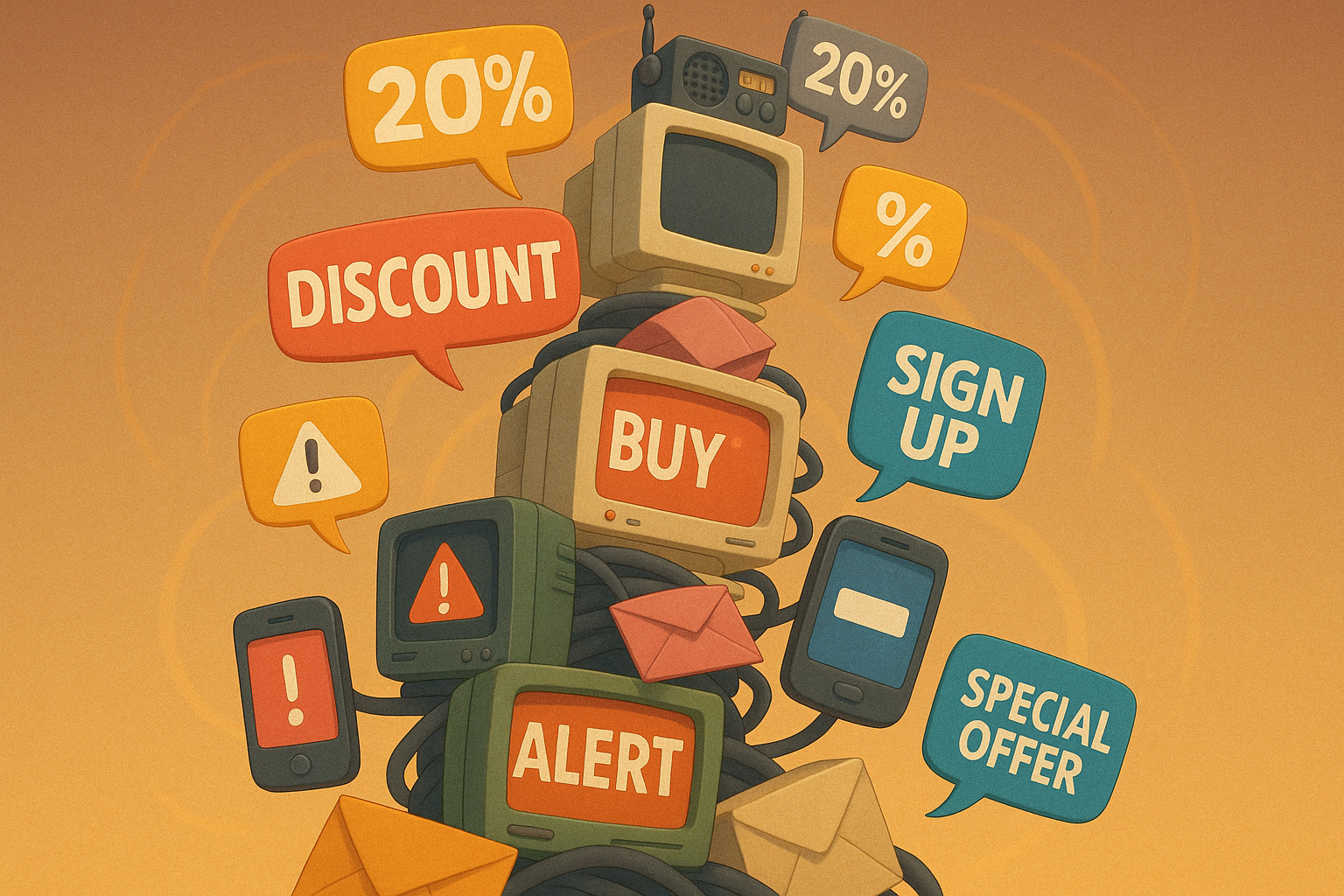
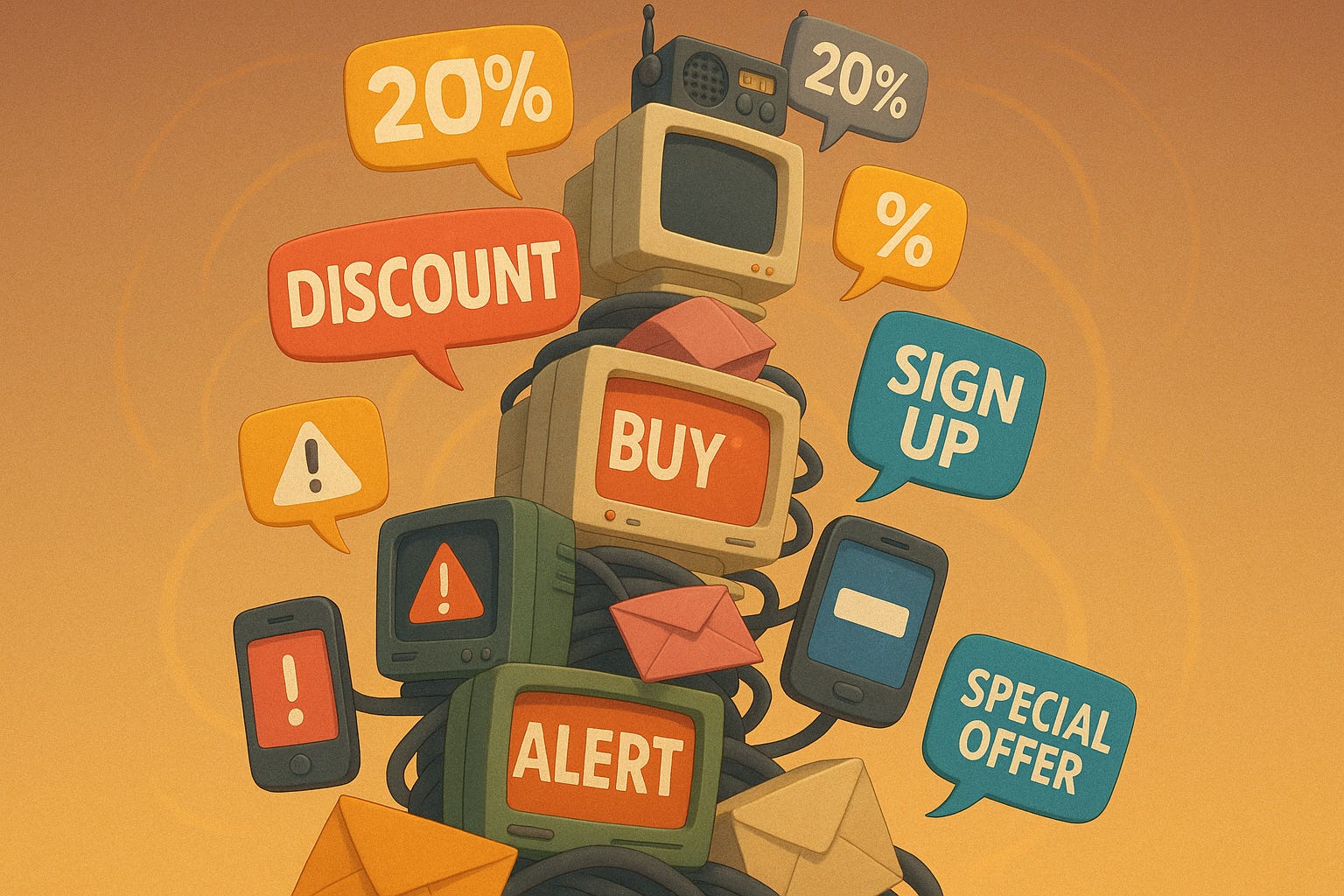
The most common question we receive at The Saltzman Group is “How can I differentiate my offering from my competitors?” Every market is crowded, and no matter what you’re selling, today’s marketplace resembles a modern Tower of Babel. As companies strive for marketing success, they speak many different languages, creating overwhelming white noise in the marketplace.
In the “old days,” there was snail mail. Once your direct mail piece was in someone’s hands, you could speak with a single voice. Then the radio was introduced, and that single message had to compete with all the other spots the station aired. It was at least audio-only… until television came along. Now, visual clutter has added to the challenge.
Once the Internet entered the picture, it was a whole new ballgame.
This led to the rise of the Internet, and messaging as we knew it faded away. The tower grew taller and infinitely noisier. Then came social media and, ultimately, video. All these channels compete, oftentimes simultaneously, for consumer attention. AI is now adding to the noise, and the noise has become constant white sound. This makes it nearly impossible for your product or service to stand out — to get prospects to focus on a single voice.
I wish we could give clients the “simple” button they want, but if such a thing exists, we haven’t found it yet (and we have looked!). What we can offer is a process that helps clients achieve clarity in their messaging and, by extension, their marketing, enabling them to stand out. Clarity is what the StoryBrand process delivers. It is just the first step in a longer process, but here’s a high-level outline of the first three crucial steps.
The first challenge is helping clients understand their target audience.
Despite their experience, few can clearly describe their target audience. A common problem is trying to target multiple groups with one message. Usually, narrowing this down is as simple as assigning revenue to each group and focusing on the most profitable one first. We tell them that while they can target different groups, each needs its own customized messaging. (See our previous column about chasing two rabbits.) Why? Because each target customer perceives their problem differently or has a unique issue.
Second, they must create a crystal-clear understanding of their prospect of the client’s problem.
To craft messaging that truly stands out, you need to be crystal clear about their problem. An important part of this process is helping our clients understand that their prospects and customers want one thing—an answer to a fundamental question: “Can you help me solve my problem?”
This part can be especially challenging. Our clients want to resolve all their issues, but those clients only focus on one specific problem. Together, we must understand not just what the issue is but also how the client perceives it. This is crucial for crafting a message that genuinely connects on an emotional level. As discussed in the sixth installment of this column, logic rarely persuades someone to buy a shiny red, overpriced sports car; emotion is already taking a test drive and sharing videos of the experience on Instagram.
Third: the three filters funnel.
To develop a compelling narrative that encourages a buyer to take action, we need to evaluate the core problem through three key filters: the external, internal, and philosophical. The external filter shows how the situation looks in the buyer’s world: what’s visible, measurable, and usually described in practical terms. The internal filter examines how the problem impacts the buyer—frustrations, doubts, and anxieties that often go unspoken but greatly influence decision-making. The philosophical filter addresses deeper feelings of injustice or beliefs about how the world should work, connecting to the buyer’s values and worldview.
Each of these filters aligns with a different neurological layer in the brain: the neocortex processes logical and external information; the limbic system manages emotions and internal functions; and the brainstem responds to primal fears and survival instincts, which are often linked to philosophical beliefs. By aligning the story with all three filters, we activate multiple parts of the brain at once, boosting engagement, emotional impact, and memorability.
Crafting a message that resonates
When we create a story that considers the buyer’s challenge from all three angles, we don’t just identify a problem; we reflect their real experience. This makes the story more believable, more personal, and more persuasive. It becomes the emotional connection that moves them from passive interest to active involvement. At the same time, this structured approach gives our client—the seller—a clear advantage: a message that feels personalized, empathetic, and genuinely relevant.
If all of this sounds like a lot of work… you’re right. But if those first three steps in the 10-step process aren’t clear, the rest of the effort to craft a message that makes your product or service stand out from the noise will fall flat. And when you fall flat, you are not only invisible, you’re on mute!
Struggling to stand out, reach the right customers, and fill your pipeline? We can help.
Schedule a 30-minute discovery call to learn about our exclusive offer for Substack subscribers.
One More Thing
For you TL;DR folks (you know who you are), check out our YouTube Snarky Summaries. (please LIKE and SUBSCRIBE)
The StoryBrand Process creates clarity that cuts through market noise and drives effective marketing. In previous episodes, we covered identifying the target client, articulating their problems, and positioning your brand as the empathetic guide with a clear plan and call to action. Three final pieces complete the puzzle.
To close the sale, we “paint” three mental pictures that transform the story into a strategy. First, success: what life looks like if they buy. Second, FOMO: what happens if they don’t? Third, transformation: who they become after working with us.
Buying decisions aren’t just spreadsheets—they’re visualizations. Neuroscience shows that imagining outcomes activates the same brain regions as experiencing them. This mental simulation makes stories more convincing than facts, engaging both the visual and emotional centers simultaneously. When done well, these three images create emotional clarity that motivates action.
The Picture of Success
The brain prefers clarity over confusion. The limbic system searches for reward and safety. Create a vivid, sensory vision of the future: instead of “We streamline operations,” depict a calm office where tasks flow smoothly, employees succeed, and crises disappear.
This activates the visual cortex and ventromedial prefrontal cortex, triggering dopamine—the brain’s “go” signal. Success feels tangible, believable, and desirable.
The Picture of Failure
Loss hurts more than gain feels good—a principle called loss aversion (Kahneman & Tversky). The second picture isn’t fearmongering; it’s honest contrast. What remains broken if they do nothing? Missed deadlines, eroded trust, mounting stress?
This activates the amygdala, increasing urgency. Discomfort with the status quo drives the push for change. Balance is essential: enough pain to motivate but not so much that it overwhelms.
The Picture of Transformation
The overlooked powerhouse. People don’t just buy outcomes—they buy identities. The medial prefrontal cortex lights up when we envision future selves. Link your solution to who they become: the overwhelmed advisor now a trusted strategist; the compliance-burdened owner now in calm control.
This causes cognitive dissonance between the current and desired self. Resolving it requires action. The purchase isn’t just transactional — it’s transformational.
Why This Works
Stories are ancient survival tools. The same circuits that once visualized successful hunts now mimic successful purchases. Three clear images provide the brain with a visual roadmap for decision-making: emotion → motivation → action.
Putting It Into Practice
Think like movie scenes, not bullet points. Focus on emotion first, then logic.
Success: “Imagine walking into your office knowing everything’s under control.”
Failure: “Picture another year of missed deadlines and sleepless nights.”
Transformation: “See yourself as the confident leader your team trusts.”
These aren’t just flourishes—they’re strategic. In StoryBrand, clarity leads. Paint vivid pictures, or the brain can’t decide the right path. Without them, you’re on mute!
Struggling to stand out, reach the right customers, and fill your pipeline? We can help.
Schedule a 30-minute discovery call to learn about our exclusive offer for Substack subscribers.
One More Thing
For you TL;DR folks (you know who you are), check out our YouTube Snarky Summaries. (please LIKE and SUBSCRIBE)
You’ve delivered the pitch. You’ve prepared the email. You’ve got the slides, testimonials, and value proposition all set. And still, your client looks confused, uninterested, or even worse… they ghost you.
No matter how polished your presentation is or how many buzzwords you pack into your deck, something’s off. It isn’t you. It is the brain you’re pitching to.
You’re on mute, and you don’t even realize it.
The cause? Behavioral biases. These hidden reflexes in our brains influence how we see, hear, and respond to the world. They aren’t just psychological quirks; they are fundamental barriers to clear communication. In business, they distort everything from how we sell to how we listen.
Let’s explore the problem and uncover three of the most harmful, hidden biases that cause your message to fall flat.
The Invisible Filters in Every Conversation
Whether you’re a founder pitching to investors or a sales executive trying to close a deal, communication is never neutral.
You’re not just sending a message. You’re transmitting it through someone else’s internal filter—a noisy mix of assumptions, habits, and emotional patterns. And guess what? You have filters too.
These filters often stem from cognitive biases. These mental shortcuts help us process the world quickly, but they can also lead to inaccuracies. They are ingrained in how humans function. While they save time, they can also create blind spots, resulting in misunderstandings, mistrust, and missed opportunities.
Here are three of the biggest offenders, along with real-world examples of how they show up in business communication and how they can subtly erode trust.
1. Confirmation Bias
I only hear what confirms what I already believe.
You’re pitching a new solution to a prospect. It’s innovative, fresh, and backed by data. But the client seems resistant from the start. Why? Because they’ve already decided what “kind” of vendor you are.
Example: Imagine you’re a tech consultant pitching to a traditional manufacturing firm. The CTO already believes that “tech guys don’t understand operations.” So every time you mention automation or software, they tune out or perceive it as a threat rather than a benefit. Your data won’t break through that wall. Their brain is only scanning for confirmation of what they already believe.
Impact: You might be providing exactly what they need, but if your message challenges their worldview, they’ll dismiss it without understanding why.
2. Anchoring Bias
The first number I hear serves as the reference point, even if it’s incorrect.
We like to think of clients as logical decision-makers. But once you quote a price, timeline, or deliverable, you’ve set a mental “anchor” that everything else is compared to.
Example: You’re in a multi-vendor bid. The first competitor offers a ballpark figure: $10,000. You respond with $18,000, based on a realistic scope. Even though your price is accurate, the client now perceives it as expensive because they’re unconsciously anchored to the $10,000 mark.
Impact: Anchors distort perception. If you’re not setting the initial frame, you’re just reacting to someone else’s, even if it’s unrealistic.
3. Overconfidence Bias
I’m already doing enough; I don’t need to change.
Sometimes, the client listens, understands, and even agrees with your insights… but still doesn’t take action. Why? Because they believe they’ve got it covered.
Example: You’re presenting a risk mitigation strategy to a mid-size enterprise. You highlight potential vulnerabilities in their supply chain. They nod along. Then they say, “We already have something like this in place.” What they mean is, “We’re confident we’re doing fine, even if we’re not.”
This isn’t stubbornness. It’s a deeply ingrained bias, the tendency to overestimate our own competence and downplay risks.
Impact: Overconfidence kills urgency. It dulls the edge of your insight and makes essential Recommendations seem optional, even when they are crucial.
These three biases don’t operate in isolation. They stack!
A client stuck on a low number, confident they’ve already solved their problem, and viewing everything skeptically? That’s not a “tough lead.” That’s a human brain doing exactly what it’s built to do: protect existing beliefs and avoid uncertainty.
Now flip it. You, the seller or communicator, are also biased. You might be ignoring signals because they don’t confirm your strategy (confirmation bias). You might be anchoring your pitch around your previous client, even if this one is totally different (anchoring). Or assuming you’ve nailed the messaging when the client clearly isn’t tracking (overconfidence).
Miscommunication isn’t always caused by a lack of skill. More often, it’s a bias trap.
You’re still on mute unless you become aware.
Here’s the bottom line: if you don’t understand the mental noise in the room, you’re not being heard. No amount of polish, automation, or AI-enhanced CRM tools can fix a pitch that’s hitting a wall of unconscious bias.
So what do you do?
Check your assumptions. Are you selling what the client truly fears or wants, or what you believe they do?
Reset the anchor. Clearly set expectations about price, scope, and value first.
Invite resistance. Ask clients what they disagree with. Their objections are often gifts—windows into their biased landscape.
Communication isn’t just about clarity; it’s about resonance. And you can’t resonate if you don’t understand what’s distorting the sound.
Final Word: Biases Don’t Silence the Message; They Silence the Listener
In an age filled with noise, everyone tries to speak louder. But often, the solution isn’t more volume—it’s a clearer signal.
If you’re not considering the invisible biases that shape your client’s perception, your message might seem perfect to you… But what about them?
You’re still on mute.
Struggling to stand out, reach the right customers, and fill your pipeline? We can help.
Schedule a 30-minute discovery call to learn about our exclusive offer for Substack subscribers.
One More Thing
For you TL;DR folks (you know who you are), check out our YouTube Snarky Summaries. (please LIKE and SUBSCRIBE)
Email is everywhere. It floods our inboxes, interrupts our days, and often masquerades as real communication. But here’s the hard truth: email is not true communication. At best, it’s just an information dump. At worst, it’s like a digital dodgeball game where everyone throws messages hoping the other side will finally catch one.
We’ve all played what could be called “the email game.” You’ve seen the coded phrases: “Per my last email” (translation: Can’t you read?), “Just following up” (translation: Clearly you thought I was joking the first time), “Not sure if my last email was received” (translation: How long are you planning to ignore me?). These polite phrases mask frustration, impatience, and even hostility. None of that builds trust or helps move business forward—it only widens the gap between people.
Why Email Falls Short
The structure of email itself undermines genuine communication. Written words alone lack the nuances of tone, inflection, and body language. Without these cues, meaning often gets distorted. What was meant as a quick request may land as a harsh demand. A joking aside might appear condescending. That’s why conflicts can easily escalate when handled by email: people fill in the blanks with their own fears or biases.
Even worse, email often slows down progress. Messages can be ignored, misfiled, or conveniently set aside “for later.” Each message sent across the inbox adds more delay and raises the risk of misinterpretation. What might take a five-minute phone call can turn into hours—or days—of inbox ping-pong.
The Human Advantage of Conversation
Humans are neurologically and socially wired for conversation. From birth, we learn through voice-to-voice and face-to-face interactions. That wiring is what creates a real connection. A live conversation delivers empathy, trust, and collaboration in ways email never can.
Instant feedback: In a conversation, you can ask follow-up questions, clarify confusion, and reach mutual understanding on the spot.
Emotional nuance: Tone, pace, and inflection reveal intention in ways words on a screen cannot.
Reduced cognitive load: Spoken language is easier for the brain to process. It’s more direct, less formal, and more spontaneous.
One conversation can replace dozens of emails. And unlike email, it fosters authentic engagement. In dialog, people listen, respond, and connect on a deeper level. That sense of engagement is what builds trust and rapport—the foundation of any successful relationship.
Conflict Resolution and Trust
When conflict arises, email pours gasoline on the fire. Written words strip away humanity and empathy, leaving plenty of room for resentment to grow. Conversations, by contrast, allow people to explain themselves, show concern, and resolve differences more effectively. Immediate feedback reduces anxiety and uncertainty, paving the way for better understanding and stronger trust.
This isn’t just psychology—it’s biology. Our brains respond positively to immediacy. The nod of agreement, the encouraging tone, and the quick clarification all lower stress and boost connection. In short, conversation is wired to succeed where email is wired to fail.
Why Calls Beat Email
Business phone calls don’t just replace email—they outperform it. A call turns what could be hours of digital back-and-forth into a few minutes of real-time problem-solving. More than efficiency, calls create a genuine human connection. That connection builds long-term relationships, the kind that lead to recurring revenue and loyalty. For companies, that’s the real “secret sauce.”
Overcoming Call Reluctance
Of course, many professionals hesitate to make a phone call. Fear of rejection, discomfort, or feeling unprepared often holds them back. But those obstacles can be overcome:
1. Acknowledge your fear. Recognize what’s holding you back—whether it’s rejection, awkwardness, or uncertainty.
2. Prepare and practice by role-playing with a colleague to boost confidence.
3. Focus on providing value. Keep in mind that you are offering solutions that help the other person.
4. Start small. Make one or two calls a day, then gradually build momentum.
5. Track your progress. Log your calls, celebrate your wins, and identify areas for improvement.
Each call boosts confidence, strengthens relationships, and speeds up results.
The True Purpose of Communication
At its core, communication isn’t just about conveying information—it’s about making others feel seen, heard, and valued. Or as one slide in the deck said: P.M.M.F.I. — Please Make Me Feel Important. Email rarely accomplishes that. Conversations do.
When we rely on email, we risk turning relationships into mere transactions. However, when we engage in conversations—whether by phone or in person—we build lasting connections. Trust, empathy, and collaboration can’t be cc’d or bcc’d. They must be spoken, heard, and felt.
Conclusion
Email might be convenient, but it isn’t true communication. Genuine connection occurs through conversations, where tone, empathy, and immediacy transform information into meaningful relationships. If you want to build trust, resolve conflicts, and develop lasting bonds, don’t hide behind the keyboard. Pick up the phone. Sit face-to-face. Have the conversation.
Otherwise, you might as well hit send, wait for the silence, and realize too late that… you’re on mute.
Struggling to stand out, reach the right customers, and fill your pipeline? We can help.
Schedule a 30-minute discovery call to learn about our exclusive offer for Substack subscribers.
One More Thing
For you TL;DR folks (you know who you are), check out our YouTube Snarky Summaries. (please LIKE and SUBSCRIBE)
In a world where consumers are bombarded with messages every waking moment, authenticity has become the currency of credibility. Slick campaigns and clever taglines can still grab attention, but attention without trust is fleeting. The brands that last are those that feel genuine, human, and aligned with the values of the people they serve. Authenticity in corporate marketing is not a buzzword. It’s a neurological necessity, a psychological trigger, and, increasingly, the difference between a loyal client and a lost sale.
The Neuroscience of Authenticity
Authenticity works because our brains are wired to recognize it. Neuroscientists studying trust have shown that oxytocin, sometimes referred to as the “bonding hormone,” is released when we perceive sincerity in others. Paul Zak, a leading researcher in trust, found that higher oxytocin levels correlate with increased willingness to engage, share, and cooperate. In other words, when a brand feels authentic, our brains react with the same neurochemical reward as when we trust a friend.
On the flip side, when messages seem inauthentic, the brain activates its amygdala, the threat-detection center responsible for fear and skepticism. This neurological red flag causes resistance, even if the logical part of the brain might otherwise find the offer convincing. Buyers may not consciously say, “This feels fake,” but their actions—whether hesitation, delay, or outright rejection—show that gut-level response.
The High Cost of Perceived Inauthenticity
When prospects sense inauthenticity, it not only costs a sale but also damages trust. It weakens the foundation for future opportunities. In B2B sales, where cycles are long and relationships are crucial, being perceived as insincere can eliminate a company from consideration entirely. Once a brand is labeled as “untrustworthy,” recovery becomes difficult.
For corporate marketers, this means that every exaggerated claim, every “too good to be true” promise, and every attempt to spin instead of solve becomes a liability. The short-term boost in impressions or clicks cannot outweigh the long-term damage of losing credibility.
Example 1: The Inauthentic vs. Authentic Tech Company
Inauthentic message: ‘Our revolutionary software solution will completely transform your business overnight. Join the thousands of companies already achieving unprecedented success.”
Authentic message: “Running a business is complex, and no single tool solves everything. Our platform helps simplify one critical part of the puzzle: payroll. It won’t make your company an overnight success, but it will save you hours each week so you can focus on growth.”
The first message might attract attention with its broad promises, but most prospects understand better than to believe in “overnight transformation.” The second recognizes reality, shows empathy, and builds trust by setting honest expectations.
Example 2: The Inauthentic vs. Authentic Wellness Brand
Inauthentic message: “Our miracle supplement is guaranteed to give you boundless energy, eliminate stress, and change your life forever.”
Authentic message: “Life is stressful, and we cannot take that away. What we can offer is a supplement designed to support calm focus throughout your day. It is not a miracle, but many of our customers tell us it helps them handle life a little more smoothly.”
The contrast is stark. The exaggerated pitch triggers skepticism, while the grounded version builds relatability and positions the company as a partner rather than a peddler of false hope.
Implications for Marketing and Sales
Authenticity carries both strategic and tactical importance.
Message Alignment: Brands must align what they say with what they deliver. A glossy ad campaign that promises personalized service will fall flat if customer service is automated and dismissive.
Content Tone: Consumers prefer conversational, transparent communication over corporate jargon. Neuroscientific research on cognitive fluency indicates that the easier a message is to comprehend, the more trustworthy it appears. Clear, direct, human language wins.
Long-Term Loyalty: Authenticity not only attracts customers but also turns them into advocates. When people feel that a company has “shown up honestly,” they are more likely to recommend it, defend it, and come back again and again.
Sales Relationships: In consultative sales, authenticity helps the salesperson become a trusted advisor. StoryBrand frameworks highlight the importance of being the guide, not the hero. Guides need to be believable, empathetic, and genuine.
The Bottom Line
Authenticity isn’t just a virtue; it’s a competitive edge rooted in neuroscience, psychology, and human nature. The brands that succeed will be those that avoid exaggeration and instead speak with honesty, clarity, and empathy.
Because once a client perceives you’re anything less than authentic, the sale is not only delayed but also compromised. It’s dead. And you are on mute!
Struggling to stand out, reach the right customers, and fill your pipeline? We can help.
Schedule a complimentary 30-minute discovery call and to learn about our exclusive offer for Substack subscribers.
One More Thing
For you TL;DR folks (you know who you are), check out our YouTube Snarky Summaries. (please LIKE and SUBSCRIBE)